
Is your Norfolk property suitable for solar?
Most are, but the answer comes down to the roof, any outbuildings or land, the shading and how your household uses power. Here is what actually decides it.
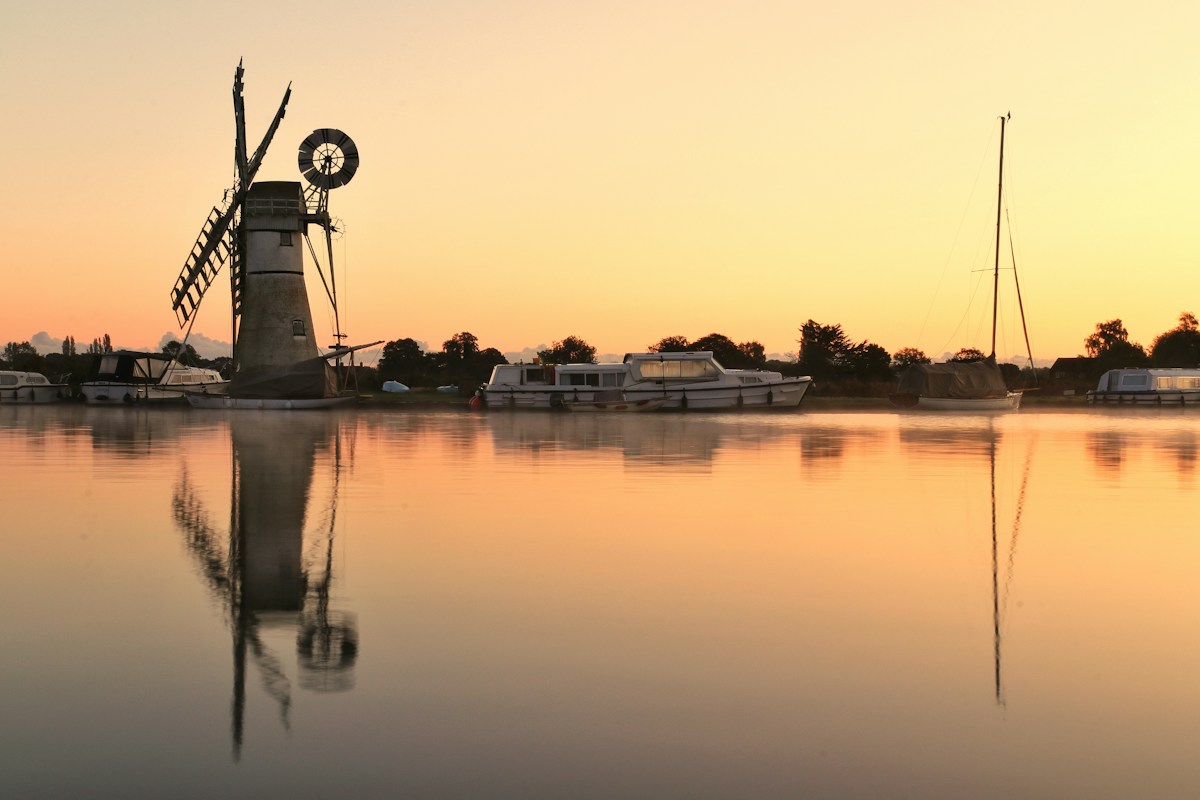 The Norfolk Broads at sunset
Your property decides the result, not the county.
Norwich gets about 1,650 hours of sunshine a year, set against a UK average near 1,403. That is a handy reference point but it cannot tell you whether a particular roof is worth the outlay. Roof pitch and direction, shading, system size and the proportion of generation the household consumes matter more, so we estimate from the property itself.
Cloudy spells trim output rather than halt it. The figure to rely on is a year's expected generation, which is why a fixed payback is never promised.
Roof
Space, direction, pitch and condition.
Shading
Trees, neighbouring buildings, chimneys and dormers.
Other space
Outbuildings, barns or land for a ground array.
Your use
When the household uses electricity, and any EV on the way.
Pantiles, thatch and listed buildings.
Norfolk has a higher share of older housing than most English counties, including around 11,000 listed buildings. Many village homes are roofed in black-glazed clay pantiles, an S-shaped tile that reached Norfolk through trade with the Netherlands via King's Lynn and Great Yarmouth, and which needs different fixings to a flat concrete tile.
None of this rules solar out. It means the survey has to look at what is on your roof rather than assume a profile.
Pantile roofs
Need mounting hooks matched to the S-shaped profile, checked at survey.
Thatched roofs
Cannot take panels directly. A ground array or outbuilding is usually the answer.
Listed buildings
Any alteration, solar panels included, needs listed building consent.
The Norfolk Coast National Landscape and your roof.
Under permitted development, most Norfolk homes can have solar panels without a planning application, as long as the panels rise no higher than 200mm above the roof surface and stay under the ridge. Stretches of coast, from The Wash in the west to Winterton in the east, fall within the Norfolk Coast National Landscape (the former AONB, or Area of Outstanding Natural Beauty), where new development is regulated more closely and work that would be allowed elsewhere may need permission.
Your exact address decides whether you fall inside the boundary and what that means for your roof. Every Norfolk home gets this checked at survey, ahead of any work being planned.
In practice
Even inside the designated area, a plain roof-mounted system on an ordinary house will usually still be permitted development. Ground-mounted arrays, larger or more prominent installations and listed buildings are the cases that tend to need permission, and we tell you which applies to you early on.
Listed buildings always require listed building consent, wherever they are, because any alteration needs separate approval.
See what your Norfolk roof could generate
Tell us where the property is and how the household uses power, and we will assess suitability, with a planning check for the property built in.
Free and no obligation. Asking about payment options is not a finance application and won't affect your credit file.
Asking obliges you to nothing. Where the property looks suitable we may be in touch to settle the planning picture first.